Perineal Repair Trainer – Mediolateral

Share this article:

Product overview · 61141

Mediolateral Perineal Repair Trainer (Light Skin Tone)

Limbs & Things logo

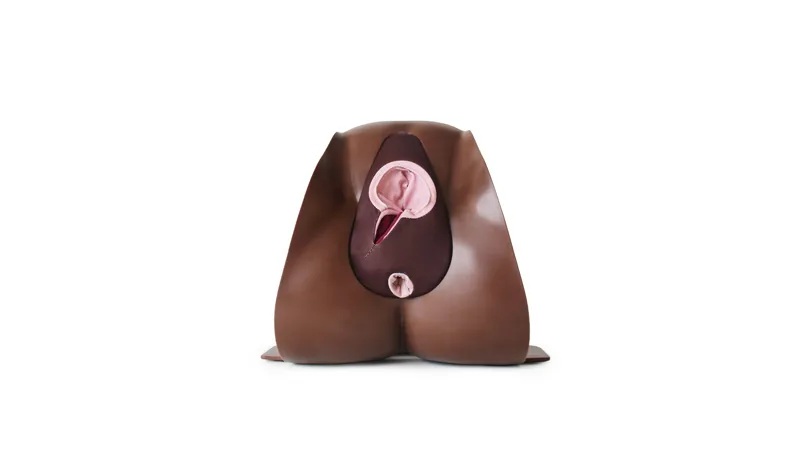
Mediolateral Perineal Repair Trainer (Light Skin Tone) — product photograph

Overview

Limbs & Things’ new Mediolateral Perineal Repair Trainer gives support on key parts of Midwifery and OBGYN curricula around the world.

What’s new on the Mediolateral Perineal Repair Trainer?

Using an innovative design, the perineum of the trainer has been changed from silicone to fabric. What does this mean when using it during simulation training?

  • The new durable fabric construction increases the life span of the trainer
  • Changes to the anal muscle mean there’s no need for lubricant
  • Revised anatomy allows for increased accuracy during procedures

As well as improved pricing and longer periods between ordering replacement parts, the new model means less waste, and reduces time spent on set up.

Watch the product video ↗

Features

Mediolateral Perineal Repair Trainer (Light Skin Tone) — additional product view
Highlights
  • Anatomically accurate model for teaching perineal suturing
  • Model represents a 2nd degree Mediolateral vaginal tear
  • Illustration pack representing each degree of perineal trauma
Realism
  • All essential layers of tissue can accept repeated sutures
  • Soft skin with a similar drag and strength to human skin
Versatility
  • Can be used alongside PROMPT Flex Birthing Simulator, by placing the trainer in front, to add further realism
  • Quick and easy to set up during training sessions
  • Clamps are provided to secure the Mediolateral Perineal Repair Trainer to the bench top
  • Trainer is compact and easily portable
Anatomy
  • Vaginal mucosa
  • Hymenal remnants
  • Posterior fourchette
  • Perineal muscles (bulbocavernosus and transverse presented together)
  • Perineal epidermis and dermis
  • Anal mucosa and sphincter
Simulated Patient
  • Perineal Repair Trainers can be used with a simulated patient
  • Used in conjunction with PROMPT Flex birthing models with a simulated patient
Cleaning
  • Should trainer require cleaning, use a soft damp cloth on the plastic parts
  • Do not get material section of this trainer wet
Safety
  • This product is latex free
  • Do not perform procedures without the trainer securely clamped to a work bench or training station
  • Do not introduce liquid or gel to the trainer
  • Ensure care when removing sutures. Using small sharp scissors or a scalpel and take care to only sever practice sutures and not integral stitching

Skills

Skills Gained

  • Recognition of internal anatomy
  • Tissue and needle handling
  • Perform mock infiltration (administering local anaesthesia, we recommend this is done “dry”, without fluid)
  • Deep musculature, subcuticular and superficial suturing
  • Repair of 2nd degree perineal tear
  • Pill rolling technique to determine classification of injury

Comparison

Light Dark
What's included 61141 61151
2nd Degree Mediolateral Perineal Repair Block (x2) 61146 61156
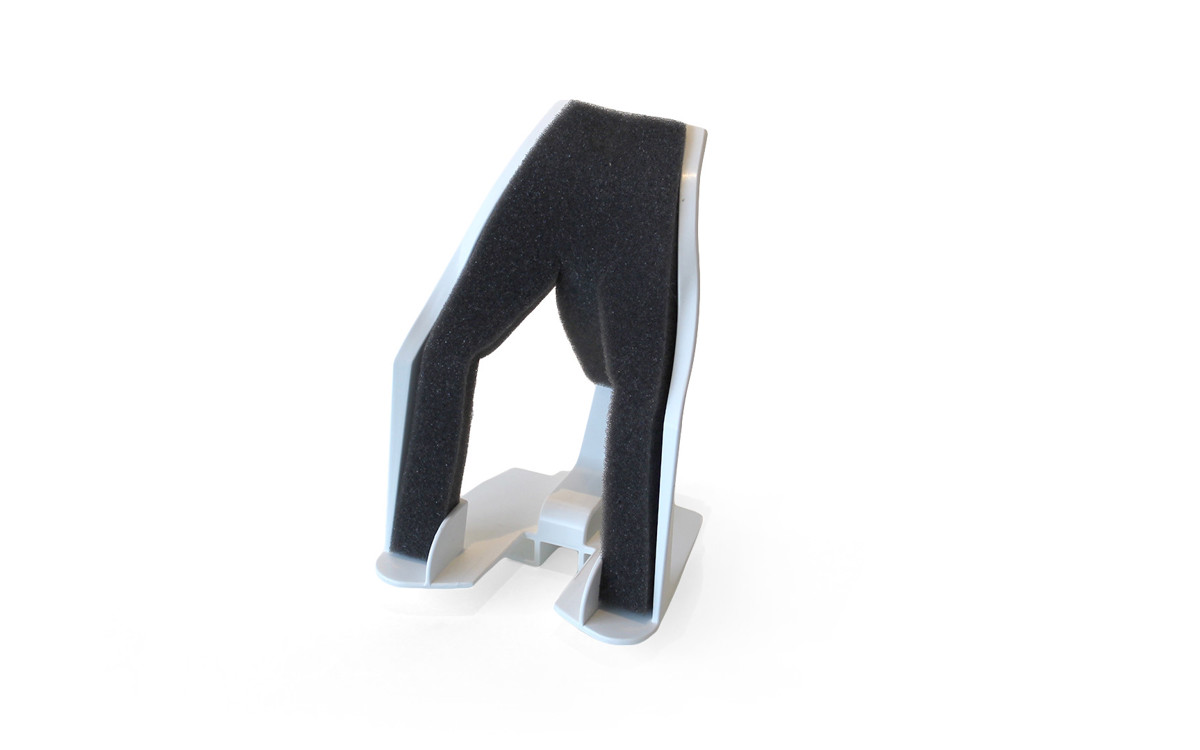
Perineal Repair Stand with Clamps 61109 61129
Perineal Repair Block Loading Handle 61110 61110
Perineal Repair Illustration Pack 61112 61132

Contains

Weight & Dimensions

  • Weight: 4.2 kg
  • Width: 29 cm
  • Height: 48 cm
  • Length: 55 cm

See weight and dimensions

Works with

Curriculum

Curriculum references and learning areas listed for this product. Edition dates are retained from the supplier’s references.

Graduate Nursing and Midwifery
Postgraduate Nursing and Midwifery
Obstetric and Gynaecology Training
Midwifery

The standards and Criteria for the Accreditation of Nursing and Midwifery Courses Leading to Registration states that midwives in Australia are expected to have experience of actual or simulated episiotomy and perineal suturing.

Undergraduate Training – Midwifery

The European Union and Article 40 (training of midwives) of Directive 2005/36/EU (Pre-registration midwifery): performance of episiotomy and initiation into suturing. Initiation shall include theoretical instruction and clinical practice. The practice of suturing includes suturing of the wound following an episiotomy and a simple perineal laceration. This may be in a simulated situation if absolutely necessary.

Obstetric and Gynaecology Training

Clinicians that choose to specialise in obstetrics and gynaecology would learn to perform an episiotomy and perineal repair by meeting the following milestones: – Core module 11: Management of delivery – Episiotomy and Perineal trauma and repair (ST1-ST5) – Core module 12: Postpartum Problems – Repair Episiotomy, 2nd, 3rd and 4th laceration – Advanced Labour Ward – perform the repair of 3rd/ 4th degree perineal tear (ST6-ST7)

Product Downloads

User Guide 61141 61151 Mediolateral Perineal Repair Trainer UG V3 Web PDF | 898.2 KB ↗

Product Brochure PROMPT Flex Range UK V13 PDF | 1.9 MB ↗

Product Brochure PROMPT FLEX 范围 – CN PDF | 3.1 MB ↗

Product Brochure PROMPT Flex Gamme – FR PDF | 2.8 MB ↗

Product Brochure PROMPT Flex Programm – DE PDF | 2.8 MB ↗

Product Brochure Gama PROMPT Flex -ES PDF | 2.8 MB ↗

FAQ

Can this perineal repair trainer offer a real life training experience?

The Mediolateral Perineal Repair model has been designed to give a close to life experience when used in training scenarios. Whether used as a stand alone trainer, with the PROMPT Flex range, or a simulated patient, you can tailor make exercises for your needs.

Why does the Mediolateral repair trainer now have a fabric perineum?

Feedback on the previous silicone perineal repair trainer was that it was too difficult for procedure novices and that for early years learners, durability was more important than fidelity. The new fabric perineal blocks offer greater durability and life span during training, this means a reduction in waste and increased value for money.

What type of tear does the Mediolateral Perineal Repair simulator demonstrate?

Mediolateral Perineal models show an example of a 2nd degree perineal tear. Although not specified, as smaller tears usually heal by themselves, you could also use this trainer to repair 1st degree perineal tears. For more severe tears, this range also includes a model representing a 4th degree OASI (obstetric anal sphincter injury).

Specifications

Weight & Dimensions
  • Weight: 4.2 kg
  • Width: 29 cm
  • Height: 48 cm
  • Length: 55 cm

Dimensions and weights are reproduced in the form provided by the supplier. Entries labelled “Box” refer to packaging.

Options

View the available configurations on the original product article ↗

Discuss your training requirements

Contact Survival Technology about this product, its configuration and your teaching requirements.

Contact Survival Technology

Quote Cart
Scroll to Top