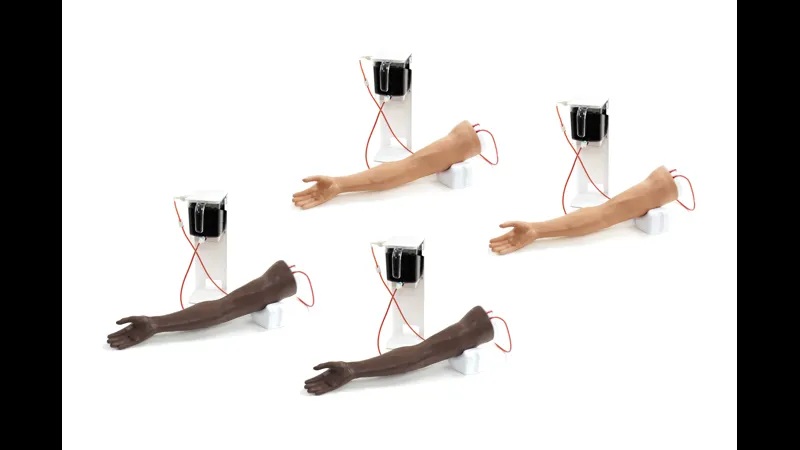
Standard Venipuncture Arm Value Pack (Light & Dark Skin Tone)

Share this article:

Product overview · 70324

Standard Venipuncture Arm Value Pack (Light & Dark Skin Tone)

Limbs & Things logo

Standard Venipuncture Arm Value Pack (Light & Dark Skin Tone) — product photograph

Overview

The NEW Standard Venipuncture Value Pack includes 4 Standard Venipuncture Arm Trainers,  4 extra ACF Vein Modules and 4 extra Venipuncture Arm Skins. This cost-effective set includes two Standard light arms, and two Standard dark arms.

The new and improved Standard Venipuncture Arm is an ideal trainer for basic and advanced learning. Incorporating a unique skin-locking system (patent pending) and modular vein systems to accurately simulate venipuncture, IV cannulation, and IV infusion training.

What are the benefits of these new model Venipuncture arms?

Unique Skin Locking System – ensures the model is easy to re-skin whilst maintaining the lifelike palpability and haptics of the underlying basilic, cephalic, dorsal metacarpal and median cubital veins.

Vein Gripping – new innovative vein gripping mechanism works in conjunction with the new arm skin to further enhance realistic and repeatable training.

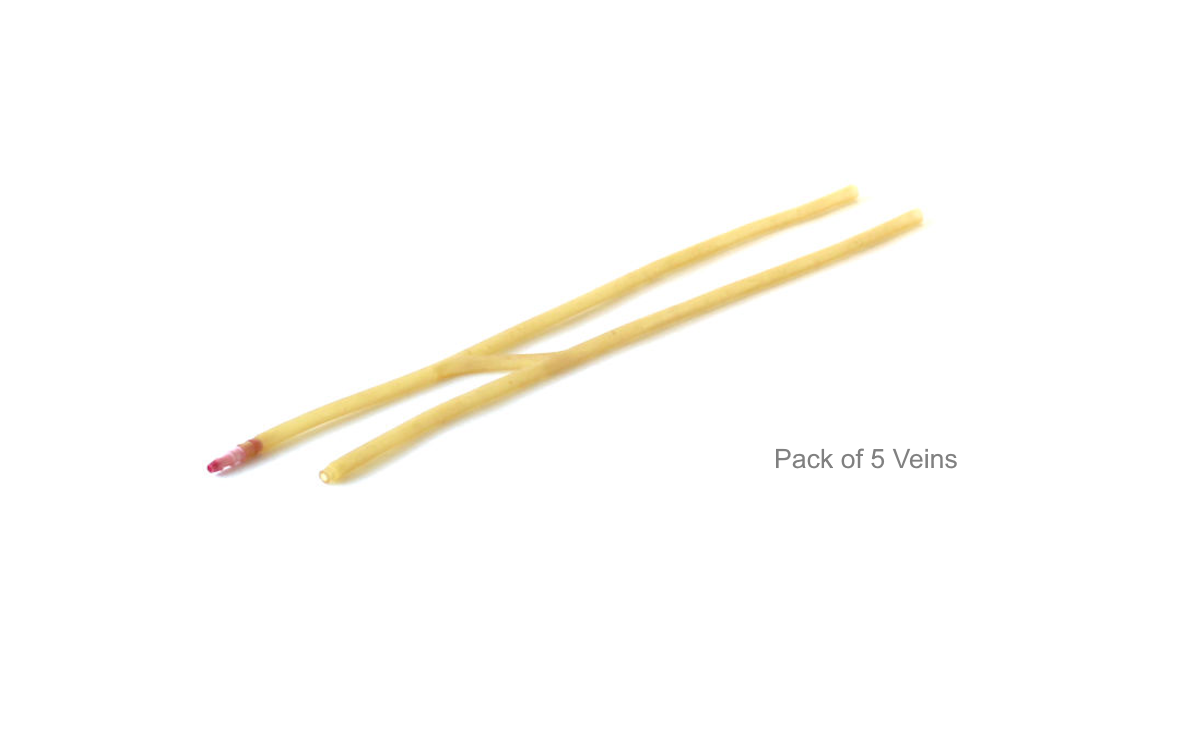
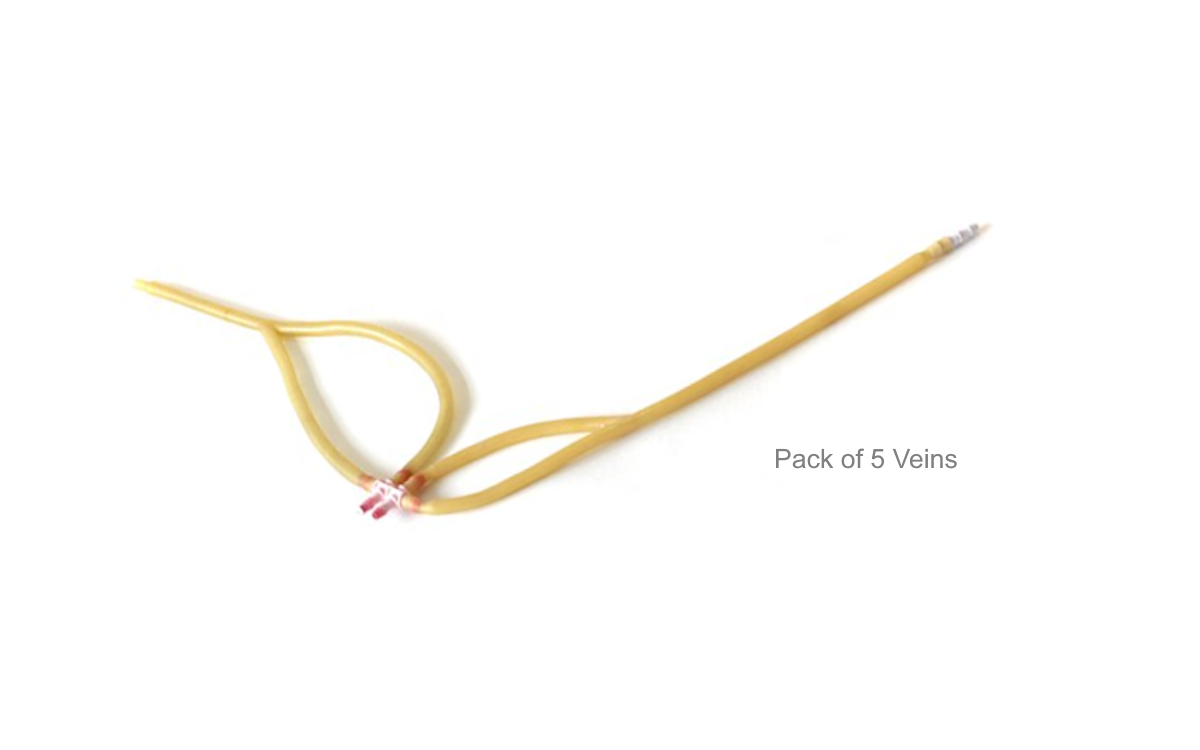
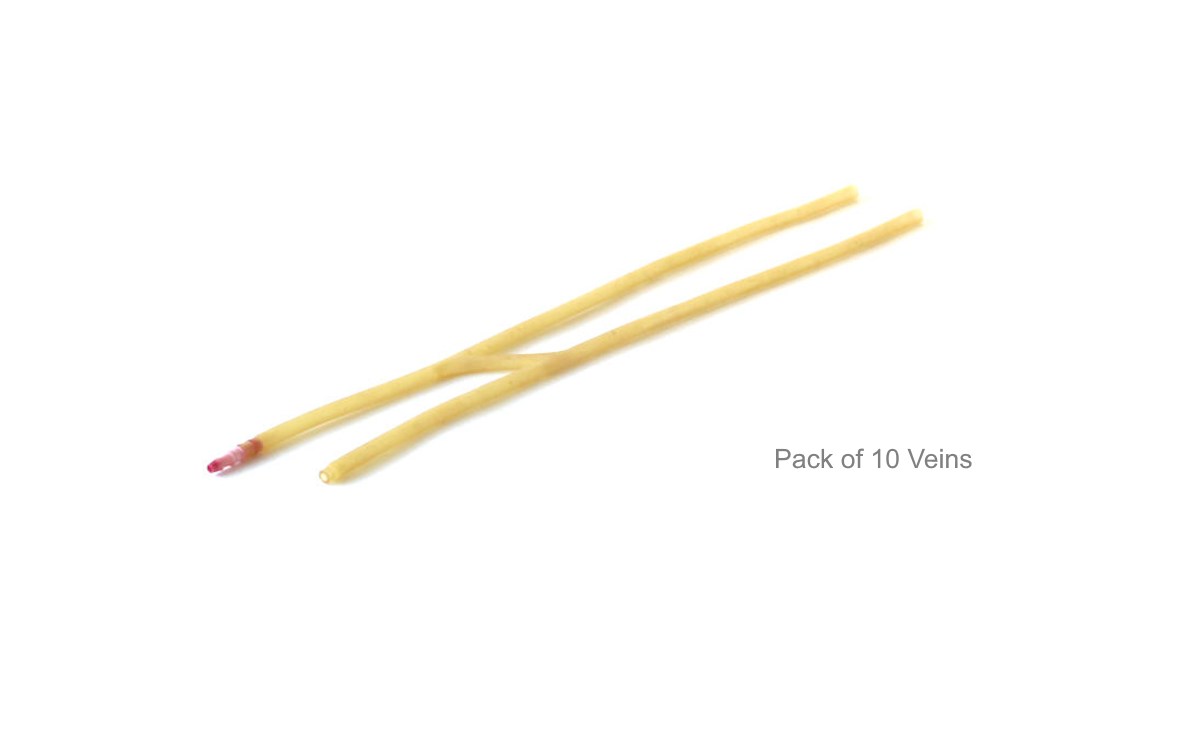
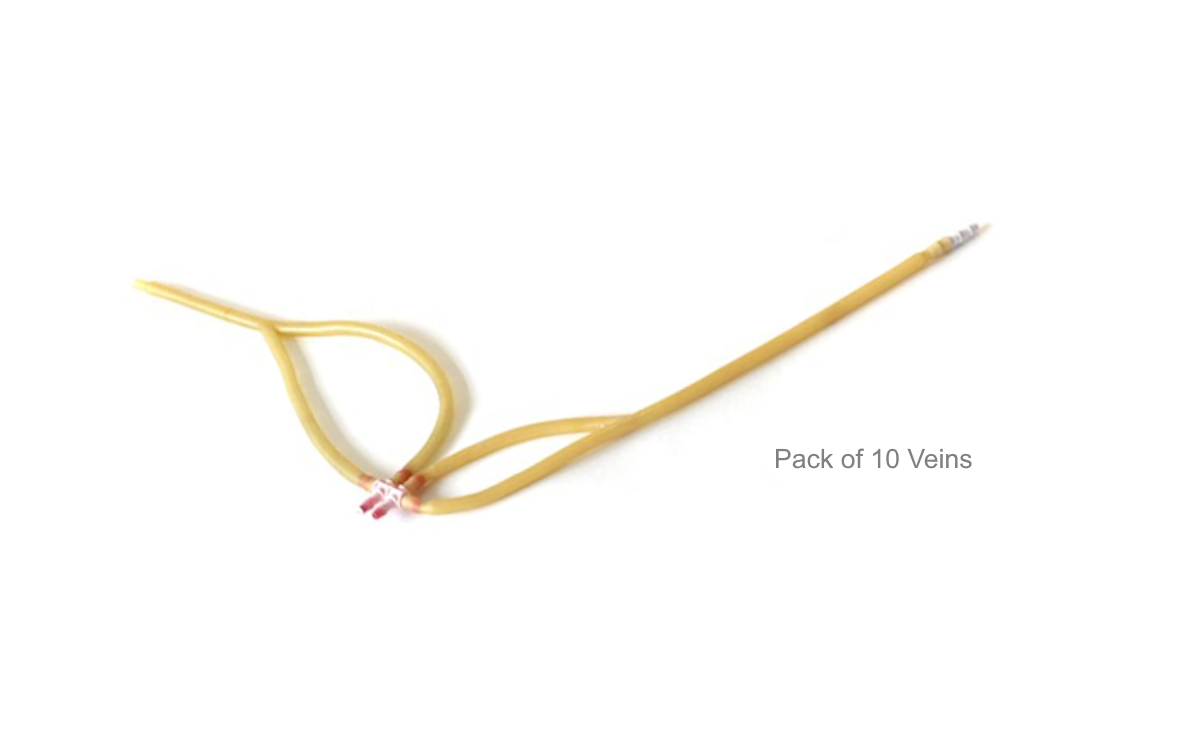
Modular Metacarpal & ACF Veins – splitting the basic vein structure into two separate modules allows for better cost efficiency, ease of use, and replacing sections individually will reduce waste.

Gravity System Blood Supply – improvements to stability of the mock blood flow simulator, and extended tubing, allow for greater versatility during simulated patient training exercises.

Take a look at how easy it is to re-skin and re-vein our IV arms. (Limbs & Things YouTube channel, runtime 1m 10s.)

Watch the product video ↗

Features

Standard Venipuncture Arm Value Pack (Light & Dark Skin Tone) — additional product view
Highlights
  • Vein structures are now modular with a separate ACF vein and Metacarpal Vein, allowing for replacement of individual parts
  • New and improved skin-locking system (patent pending) improves arm re-skinning after replacing a vein module
  • New vein gripping system allows for easy re-fitting and positioning of veins
  • Veins are palpable with realistic haptics for accurate clinical use
  • Infusion tube allows for intravenous fluids to be administered
  • Improved, gravity blood system
Realism
  • Arm provides a realistic blood flashback upon insertion of needle
  • Improved arm skin offers a more realistic look and feel
  • Veins in the metacarpal & ACF modules are palpable
  • Realistic representation of the antecubital fossa (SCF) and metacarpal regions
  • Gripping systems secures veins in a true-to-life position
Versatility
  • Arm is compatible with vacuum blood collection systems, needles & syringe, and IV cannulas
  • Extended tubing allows for extra maneuverability in the classroom for use with a simulated patient
Anatomy

Sites for peripheral venous cannulation

  • Dorsal metacarpal vein in the hand
  • Antecubital Fossa (ACF) vein in the arm

Metacarpal Vein Module anatomy 

  • Basilic vein 
  • Cephalic vein 
  • Dorsal metacarpal veins 

ACF Vein Module anatomy 

  • Basilic vein 
  • Cephalic vein 
  • Median cubital vein 
Simulated Patient
  • Suitable for use with a simulated patient to test communication skills
Cleaning
  • Flush liquid from the vein and fluid system before storing your product
  • Clean the skin surface with a damp soft cloth, using warm water and mild detergent
  • Allow skin to thoroughly dry before storing
Safety
  • Only use Concentrated Venous Blood supplied with the arms, or product numbers 00020 & 00021, other fluids may weaken or damage the venipuncture simulator
  • Use water-based lubricant to fit arm skin over the venipuncture arm base
  • Veins contain latex, however, these are covered by the silicone arm skin during procedures
Product type
  • Task Trainer
  • Pack

Skills

Skills Gained

  • Intravenous Cannulation in dorsal metacarpal and ACF sites
  • IV infusion
  • Venipuncture
  • Practice of aseptic techniques
  • Communications skills when using a simulated patient

Contains

Weight & Dimensions

Box 1

  • Weight: 11 kg
  • Width: 20 cm
  • Height: 30 cm
  • Length: 100 cm

Box 2

  • Weight: 11 kg
  • Width: 20 cm
  • Height: 30 cm
  • Length: 100 cm

Box 3

  • Weight: 11 kg
  • Width: 20 cm
  • Height: 30 cm
  • Length: 100 cm

Box 4

  • Weight: 11 kg
  • Width: 20 cm
  • Height: 30 cm
  • Length: 100 cm

See weight and dimensions

Works with

Curriculum

Curriculum references and learning areas listed for this product. Edition dates are retained from the supplier’s references.

Undergraduate

Clinical Skills in the Undergraduate Medical Curriculum 2013, University of Otago Punctures and Aspirations: Venipuncture – for routine blood tests • can independently perform the skill safely and effectively in the clinical setting in Years 4/5/6/TI Peripheral intravenous cannulation • In years 4/5 student should be able to demonstrate performance of the skill but does not indicate or equate to competence at the skill. • Can independently perform in clinical setting in Yr 6/TI

Postgraduate, Residency, Junior Doctors

Doctors should be able to provide safe treatment to patients through competently performing certain procedural and/or assessment skills Intravenous Venipuncture Intravenous cannulation

Undergraduate Medicine

Outcomes for graduates (Tomorrow's Doctors), Appendix 1 – Practical procedures for Graduates, p.12-14: 4. Venipuncture. Inserting a needle into a patient's vein to take a sample of blood for testing, or to give an injection into the vein. 17. Establishing a peripheral intravenous access and setting up an infusion; use of infusion devices. Puncturing a patient's vein in order to insert an indwelling plastic tube (known as a cannula), to allow fluids to be infused into the vein (a drip). Connecting the tube to a source of fluid. Appropriate choice of fluids and their doses. Correct use of electronic devices which drive and regulate the rate of fluid administration.

Postgraduate

UK Foundation Programme Curruculum, August 2014, p.50: Table 2. Commonly requested investigations • Venipuncture • IV cannulation • Preparation and administration of IV medication and injections and fluids F1 outcomes • Competently performs and, when sanctioned by a supervisor, teaches medical students in the … procedures … either in the workplace or on simulated patients F2 outcomes (in addition to F1) • Maintains and improves skills in the core proced- ures e.g. reliably able to perform venous cannulation in the majority of patients in more challenging circumstances such as during resuscitation • Demonstrates extension of the range of procedures they can perform GMC Outcomes for provisionally registers doctors with a licence to practise (The Trainee Doctor), 2015, p,8: Core clinical and procedural skills …: Venipuncture, IV cannulation, Prepare and administer IV medications and injections…Intravenous infusion including the prescription of fluids, Intravenous infusion of blood and blood products

Core Medical Training

Specialty Training Curriculum for Core Medical Training, August 2013, p.165: The CMT STR is expected to be competent, and maintain competency, in the following practical procedures in the Foundation curriculum during Core Medical Training: … Venipuncture

Emergency Medicine Trainees

THE ROYAL COLLEGE OF EMERGENCY MEDICINE Curriculum and Assessment Systems For Training in Emergency Medicine 2015 (Revised 2016): CMP4 Septic Patient … takes blood cultures and administers … intra-venous fluids in accordance with 6 hr sepsis bundle ICM Competency: Demonstrates aseptic peripheral venous cannulation • Demonstrate the ability to establish peripheral venous cannulation using an appropriate technique, demonstrating effective infection control measures and proper regard for patient safety and well being

Physician Assistants

NHS National Practitioner Program: Matrix Specification for the Physician Associate (2016). p.127: Core Procedural Skills: Venipuncture; IV cannulation; Arterial Blood Gas Sampling

Registered Nurses

RCN Standards for Infusion Therapy: Nursing involvement ranges from caring for an individual with a peripheral cannula in situ, to … Infusion nursing is not limited just to the care of the patient and the device. Increasingly nurses are responsible for the insertion and removal of the device Veins that should be considered for peripheral cannulation are those found on the dorsal and ventral surfaces of the upper extremities including the metacarpal, cephalic and basilic p 26 p35 Vascular Access Device Removal The removal of any vascular access device must only be undertaken by an appropriately trained practitioner. Those commonly removed by nurses include cannulas, 8.11 Blood Sampling p.58 Blood sampling (Venipuncture, blood cultures, capillary blood sampling or via vascular access devices) should be performed on request of a clinician and/or health care professional or according to established protocols, using aseptic technique and observing standard precautions. NMC Future nurse: Standards of proficiency for registered nurses, 17 May 2018, p.32: 2.2 undertake Venipuncture and cannulation and blood sampling, interpreting normal and common abnormal blood profiles and venous blood gases

Healthcare Assistants

The Cavendish Review – An Independent Review into Healthcare Assistants and Support Workers in the NHS and social care settings – July 2013, p18 Advanced tasks 3.7.1. Partly as a consequence of nurses spending increasing time on organisational tasks, some HCAs are now doing a wide range of more advanced tasks traditionally undertaken by registered nurses. These include … cannulation (the insertion of an IV drip or tracheotomy tube)…. setting up infusion feeds … taking blood samples…

Phlebotomists

Direct gov careers website says: Training and development: You will usually receive on-the-job training, which can take up to six months and include: … • methods of blood collection and labelling • choosing appropriate sites for taking blood samples (Venipuncture) … UCL 1 day phlebotomy course This course is designed for any healthcare professional or research scientist who is required to take blood from patients in a clinical or research environment. We also accept members of the public who are planning to pursue a career as a hospital phlebotomist: “Participants will practise on simulation arms – never more than 2 participants per arm. After practising the skill on a manikin you will have the opportunity to take blood from a fellow participant providing they give consent. By the end of this session, candidates will be able to: Demonstrate appropriate infection control principles when performing phlebotomy. Use both the butterfly system and the vacutainer system to collect a blood sample. List the potential complications during and after taking blood. Take blood from a real person under supervision. You will NOT receive a certificate of COMPETENCE; only of Attendance. You cannot claim that you are competent in phlebotomy after only one successful attempt on a real person. Competence will be deemed by future employers and can vary between institutions.”

Product Downloads

User Guide 70302 70303 Standard Arm UG V4 Web PDF | 1.5 MB ↗

Specifications

Weight & Dimensions
Box 1

  • Weight: 11 kg
  • Width: 20 cm
  • Height: 30 cm
  • Length: 100 cm

Box 2

  • Weight: 11 kg
  • Width: 20 cm
  • Height: 30 cm
  • Length: 100 cm

Box 3

  • Weight: 11 kg
  • Width: 20 cm
  • Height: 30 cm
  • Length: 100 cm

Box 4

  • Weight: 11 kg
  • Width: 20 cm
  • Height: 30 cm
  • Length: 100 cm

Dimensions and weights are reproduced in the form provided by the supplier. Entries labelled “Box” refer to packaging.

Discuss your training requirements

Contact Survival Technology about this product, its configuration and your teaching requirements.

Contact Survival Technology

Quote Cart
Scroll to Top