

Product overview · 41500
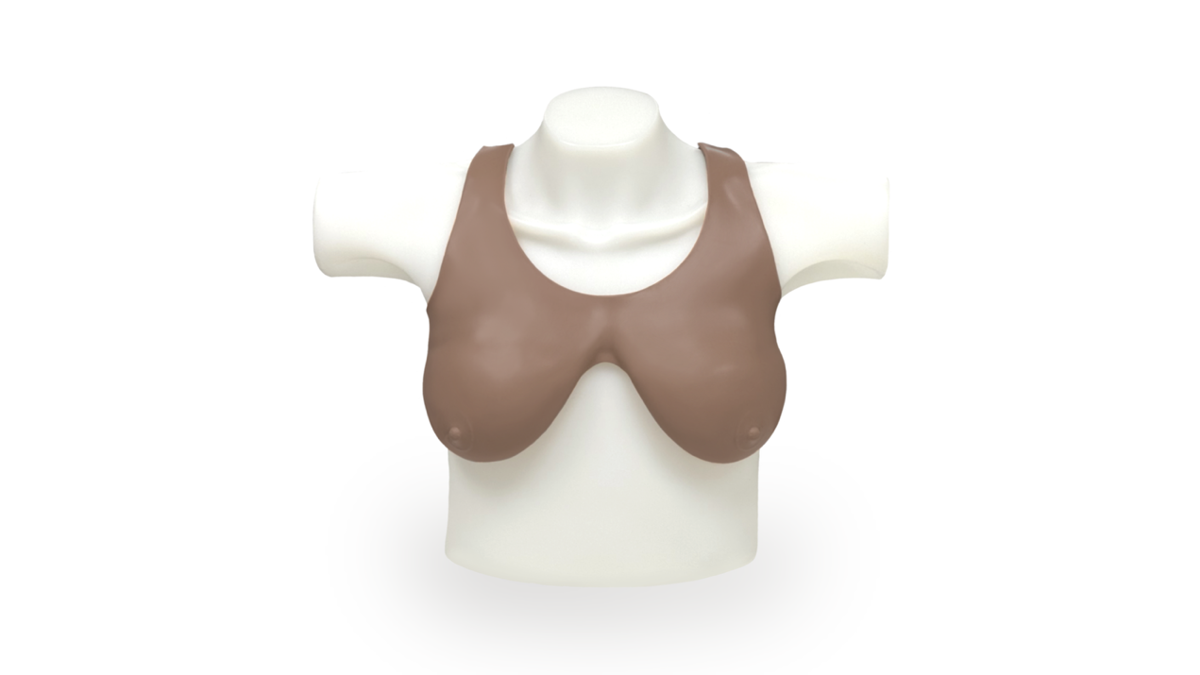
Female Breast Overlay (Dark Skin Tone)

Overview
Add the Female Breast Overlay onto a variety of simulation manikins for expanded training opportunities.
- Increase training realism for health screenings, examinations and emergency response
- Boost patient handling skills with training scenarios that include a range of anatomical presentations
- Strengthen staff preparedness for gender inclusive care scenarios
- Support more accurate practice of procedures such as palpation, positioning, and fitting of medical devices
- Double simulation capabilities without purchasing additional full-body or torso manikins
- Open discussion regarding adapting to different patient anatomy
Fully adjustable
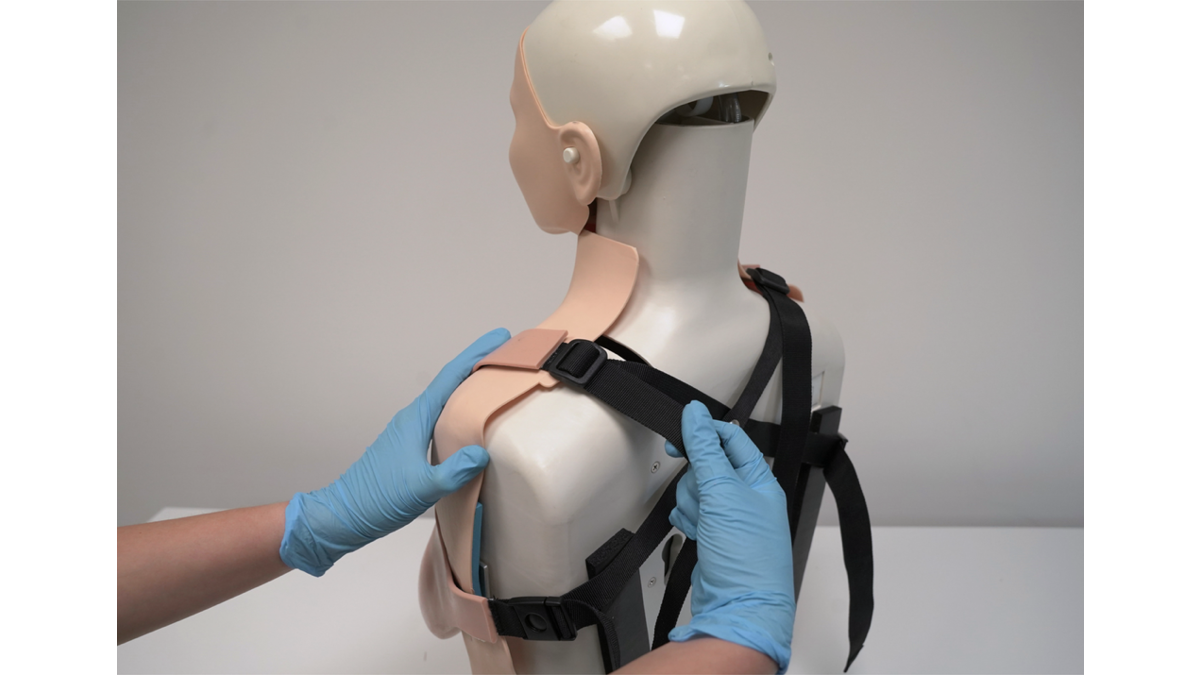
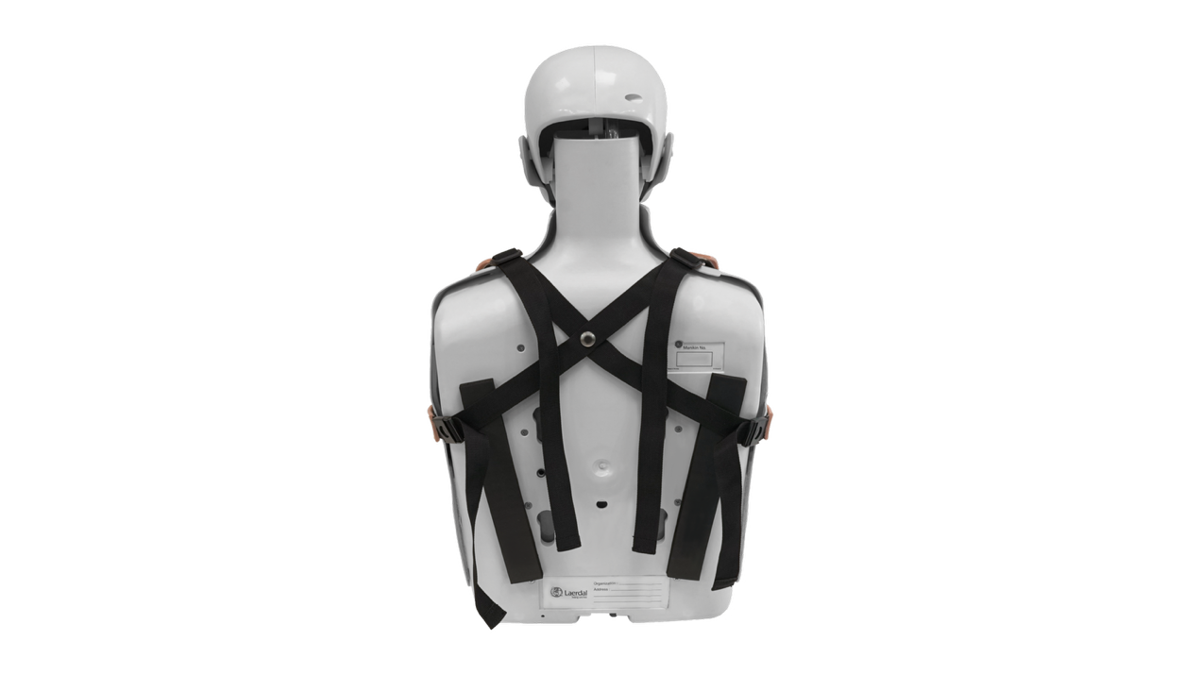
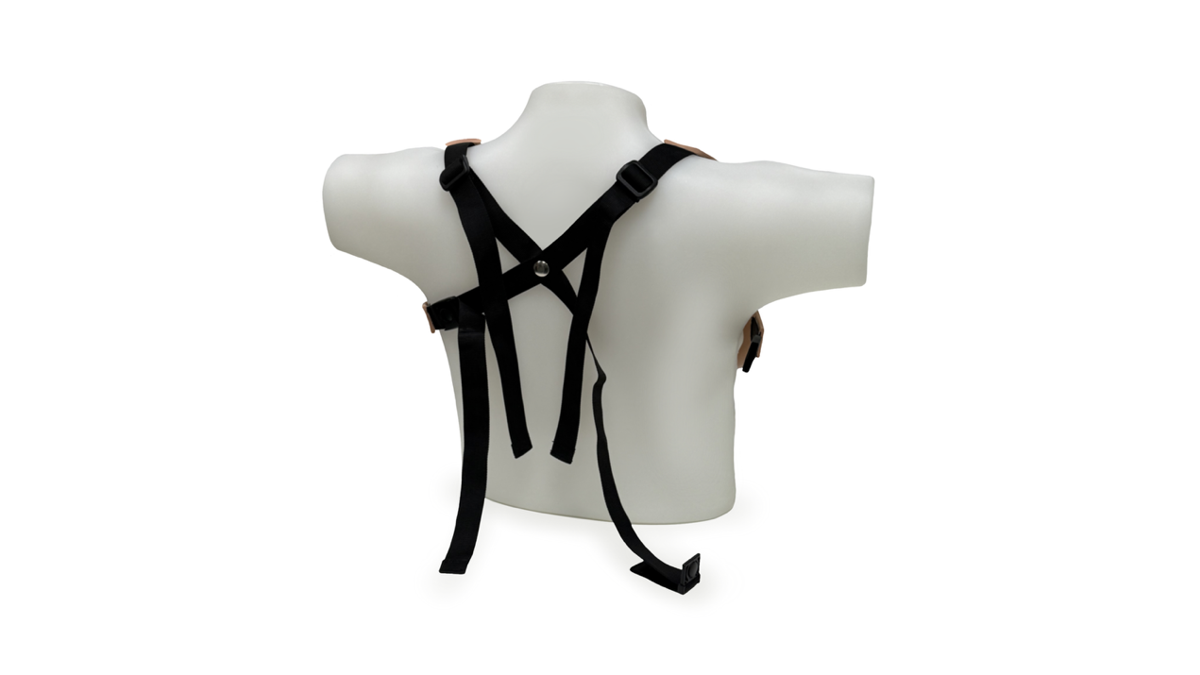
Central Release Buckle fastenings on the Female Breast Overlay clip at the side of the torso for minimal interference during training, and sit securely under the arms of full-body manikins.
Adjustable tri-glide buckles at the shoulders and D-DOT fastening connecting the two straps allow for easy fitting to existing training models.
Diverse Training
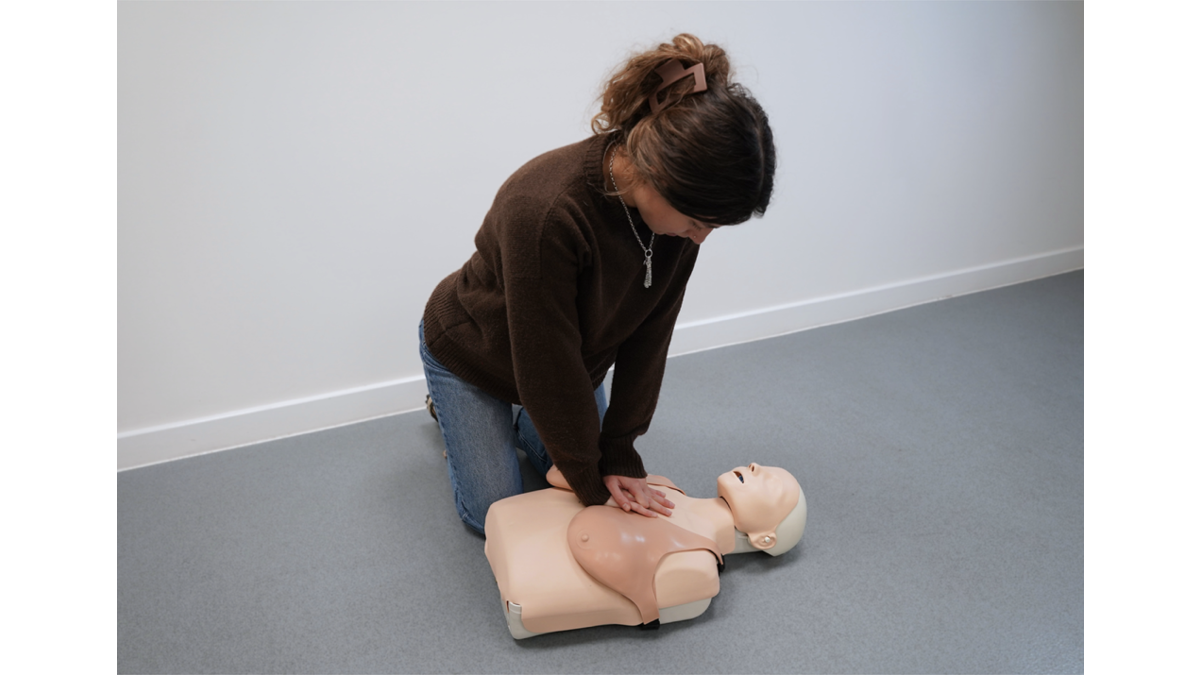
With the addition of a female chest overlay, the scope of medical simulation training (including cardiopulmonary resuscitation) can be broadened to include the societal and gender biases that are present in some existing training programs.
Evidence relating to diversity of medical simulation manikins:
- The DIVERSE Study surveyed CPR training organisations, looking at the characteristics of the manikins used within training courses. Out of 2,383 manikins, 12% were non-white, 6% female, <1% non-lean physique
- Does the sex of a simulated patient affect CPR? Indicated that “rescuers had better hand placement for CPR on the female” manikins but were reluctant to remove the female's clothing, rescuers were hesitant to remove the female’s clothing (though no conclusive studies have been done, this could cause issues with pad placement and defibrillation)
- Implementation of a Breast Adjunct for CPR Training Manikins Increased Reported Comfort in Performing CPR on Women. Highlights that bystander CPR improves a victim’s chance of survival (regardless of anatomy), and that training with female simulation manikins allowed trainees to feel more comfortable through familiarisation
- CPR training as a gender and rights-based healthcare issue, found that “most adult CPR manikins are flat-chested (95%) and appeared more representative of the male sex” and the “vast majority (90%)” appeared white, lean and androgynous
Features
Skills
Skills Gained
- Performing procedures and examinations on female anatomy
Abstract: Certain demographic groups are less likely to receive efficient Cardiopulmonary resuscitation (CPR), and poor representation of these groups in the manikins used for CPR simulation may play a role. The aim of the DIVERSE Study was to survey organizations that teach CPR to determine the demographic characteristics of the manikins they utilize for simulations. Institutions, businesses, and non-governmental organizations which provide CPR certification in North and Latin America were surveyed through a collaboration with the Emerging Leaders group of the Interamerican Society of Cardiology (SIAC). A total of 56 survey responses were received from North America (n = 18; 869 total manikins) and Latin America (n = 38; 1514 total manikins). Of the total manikins (n = 2383), 12% were non-white, 6% represented women, <1% represented a non-lean body habitus, and 1% represented pregnant individuals. Despite the importance of diverse manikin representation in simulation training, diverse representation is lacking in manikins used in North and Latin America.
Kiera Liblik, Jin Byun, Andrew Lloyd-Kuzik, Juan M Farina, Lucrecia M Burgos, Daniel Howes, Adrian Baranchuk. 2023 Jul;48:101159. doi: 10.1016/j.cpcardiol.2022.101159. Epub 2022 Feb 22.
Results: After de-duplication and removal of incomplete responses, data of 133 organisations from 43 countries from six continents reporting on 5,364 manikins were analyzed. Most organisations (55%) use only white, male/flat-chested, lean manikins. Non-white manikins were the most commonly used diversification (33% of participating organisations). Only 20% of organisations use female manikins. Greater diversification is thought to enhance realism in training, promote inclusivity, and allows participants to be more aware of real-world situations involving diverse patient populations. Barriers described were high costs, low awareness towards the need of manikin diversity, institutional resistance to changes, and limited evidence on the impact of diversification.
Conclusion: The vast majority of reported adult and pediatric CPR manikins are white, male/flat-chested, and lean, and thus lack diversification. Almost one-fifth of respondents indicated to put a bra on a “standard” manikin to simulate a female manikin. Research into diversified manikin use, how to overcome barriers, and its impact on educational and clinical outcomes are needed.
Christoph Veigl, Natalie Anderson, Marco Neymayer, Sabine Heider, Benedikt Schnaubelt, Andrea Kornfehl, Pauline Convocar, Enrico Baldi, Jacqueline Eleonora Ek, Rakesh Garg, Zehra’ Al-Hilali, Mahmoud Tageldin Mustafa, Mario Krammel, Federico Semeraro, Lauren Lai King, Robert Greif, Sebastian Schnaubelt. Resusc Plus. 2025 May 15;24:100984. doi: 10.1016/j.resplu.2025.100984
Results: Rescuers removed significantly more clothing from the male than the female, with men removing less clothing from the female. More rescuers' initial hand placements for CPR were centered between the female's breasts compared to the male, on which placement was distributed across the chest towards the nipples.
Discussion: While rescuers had better hand placement for CPR on the female, both men and women rescuers were reluctant to remove the female's clothing, with men significantly more hesitant. Reticence to remove clothing was often articulated relative to social norms during structured interviews. We suggest that using only male simulators will not allow trainees to experience social differences associated with the care of a female simulated patient. Realistic female patient simulators are needed.
Chelsea E Kramer, Matthew S Wilkins, Jan M Davies, Jeff K Caird, Gregory M Hallihan. Resuscitation 2015 Jan:86:82-7. doi: 10.1016/j.resuscitation.2014.10.016. Epub 2014 Nov 4.
CONCLUSION: Our work highlights that there is a limited range of diverse CPR training manikins available globally. This is despite interest by the simulation and resuscitation communities since 2014 (Boada et al., 2018). Whilst our study focused on CPR training manikins and the potential implications for women or those with breasts, the issue of diversity and equity of all manikins used in healthcare training warrants further attention and research. We hope all manikin manufacturing companies commit to expanded EDI policies to include their manikins by 2030, and to also consider developing human rights policies more broadly… Laerdal Medical’s 2023 sustainability policy and framework could be used as a template along with existing UNGP reporting frameworks and the CDoH Model (Gilmore et al., 2023). Our call to action does not stop there. We urge all those involved in CPR training to engage in further research as well as to develop policies and practices to achieve equity. Achieving equitable outcomes for cardiac arrest globally is fundamental for health as a human right. A common approach by all actors aligned with the UNGPs and CDoH may help achieve this goal.
Rebecca Amalia Szabo, Kirsty Forrest, Peter Morley, Stephanie Barwick, Komal Bajaj, Kellie Britt, Sarah A Yong, Jocelyn Park-Ross, David Story, Jessica Stokes-Parish. Health Promot Int. 2024 Nov 21;39(6):daae156. doi: 10.1093/heapro/daae156
Background:
Previous research has found a relationship between students’ gender and attitudes surrounding peer physical examination, but relationship between patient gender and confidence/comfort is less clear. We explored whether patient gender affects medical students’ levels of confidence and comfort in clinical examination skills.
Results:
Of a total of 1500 students provided with the opportunity to participate, ninety (6%) responded. For cardiovascular and respiratory examinations, confidence/comfort were higher when examining male-presenting patients. The opposite was true for mental state examinations. Barriers to confidence/comfort included perceiving males as a norm, difficulty navigating breasts, tutors’ internalised gendered attitudes and a wider sociocultural issue. Facilitators of confidence/comfort included students relating to patients, embodying a professional role, gender blindness, and authentic clinical environments. Fewer than 20% (n = 18) of students felt they had enough opportunity to practice clinical skills on women, versus 90% (n = 82) on men.
Politis, M., El Brown, M., Huser, C. A., Crawford, L., & Pope, L. (2022). Education for Primary Care, 33(6), 316–326. https://doi.org/10.1080/14739879.2022.2129460
Product Downloads
User Guide 40500 41500 Breast Examination Overlay UG PDF | 759.8 KB ↗
FAQ
Training experience
A training example from Cambridge University Hospitals NHS Foundation Trust describes using the Female Breast Overlay to make resuscitation practice more representative of patients with different body shapes. Learners practised removing bras, moving breast tissue and positioning defibrillator pads.
The supplier’s account cites a St John Ambulance survey in which 46% of respondents said they would not attempt defibrillator use on a woman. It also reports a 64% increase in confidence following training with the overlays. These are findings quoted in this specific training account, rather than a general guarantee of outcomes.
Specifications
Dimensions and weights are reproduced in the form provided by the supplier. Entries labelled “Box” refer to packaging.
Options
- Skin Tone: Light
- Skin Tone: Dark — shown in this article
View the available configurations on the original product article ↗
Discuss your training requirements
Contact Survival Technology about this product, its configuration and your teaching requirements.